
Recorder · treble clef
Recorder Scales
All 12 major scales for recorder, one octave each, with the fingering for every note. Tap a note to see it larger, or play the whole scale.
C major
Cover every hole completely and blow very gently.
Like low C with the pinky lifted.
Fork fingering: lift only the right middle finger.
F major
Fork fingering: lift only the right middle finger.
Skip the left middle finger.
Thumb off; only the left middle finger stays down.
Pinch the thumb: bend it so a small gap opens at the top of the thumb hole.
Like low F with the thumb pinched and the pinky up: right middle finger up, right ring finger down.
B♭ major
Skip the left middle finger.
Thumb off; only the left middle finger stays down.
Thumb and left first finger off; the other fingers stay down, but keep the right pinky up.
Like low F with the thumb pinched and the pinky up: right middle finger up, right ring finger down.
Same as low G with the thumb pinched; blow a little faster.
Same as A with the thumb pinched; keep the thumb gap small.
E♭ major
Cover only the larger of the two holes under the right ring finger.
Fork fingering: lift only the right middle finger.
Left ring finger up; the right ring finger covers only the larger of its two holes.
Skip the left middle finger.
Thumb off; only the left middle finger stays down.
Thumb and left first finger off; the other fingers stay down, but keep the right pinky up.
A♭ major
Left ring finger up; the right ring finger covers only the larger of its two holes.
Skip the left middle finger.
Thumb off; first two fingers down.
Thumb and left first finger off; the other fingers stay down, but keep the right pinky up.
Like low F with the thumb pinched and the pinky up: right middle finger up, right ring finger down.
Same as low G with the thumb pinched; blow a little faster.
D♭ major
Cover only the larger of the two bottom holes.
Cover only the larger of the two holes under the right ring finger.
Fork fingering: lift only the right middle finger.
Like D with the right first finger lifted.
Left ring finger up; the right ring finger covers only the larger of its two holes.
Skip the left middle finger.
Thumb off; first two fingers down.
G♭ major
Like D with the right first finger lifted.
Left ring finger up; the right ring finger covers only the larger of its two holes.
Skip the left middle finger.
Thumb off; first two fingers down.
Thumb and left first finger off; the other fingers stay down, but keep the right pinky up.
Like low F with the thumb pinched and the pinky up: right middle finger up, right ring finger down.
Pinched thumb; only the right middle finger stays down.
B major
Thumb off; first two fingers down.
Thumb and left first finger off; the other fingers stay down, but keep the right pinky up.
Pinch the thumb: bend it so a small gap opens at the top of the thumb hole.
Pinched thumb; only the right middle finger stays down.
E major
Like D with the right first finger lifted.
Left ring finger up; the right ring finger covers only the larger of its two holes.
Thumb off; first two fingers down.
Thumb and left first finger off; the other fingers stay down, but keep the right pinky up.
Pinch the thumb: bend it so a small gap opens at the top of the thumb hole.
A major
Thumb off; first two fingers down.
Thumb off; only the left middle finger stays down.
Pinch the thumb: bend it so a small gap opens at the top of the thumb hole.
Pinched thumb; only the right middle finger stays down.
Same as A with the thumb pinched; keep the thumb gap small.
D major
Like low C with the pinky lifted.
Like D with the right first finger lifted.
Thumb off; first two fingers down.
Thumb off; only the left middle finger stays down.
G major
Thumb off; only the left middle finger stays down.
Pinch the thumb: bend it so a small gap opens at the top of the thumb hole.
Pinched thumb; only the right middle finger stays down.
Same as low G with the thumb pinched; blow a little faster.
About these scales
Each scale is shown in the octave that sits most comfortably on the instrument.
For the full range and alternate fingerings, see the recorder fingering chart.
Chromatic scale one octave from C4
Cover every hole completely and blow very gently.
Cover only the larger of the two bottom holes.
Like low C with the pinky lifted.
Cover only the larger of the two holes under the right ring finger.
Fork fingering: lift only the right middle finger.
Like D with the right first finger lifted.
Left ring finger up; the right ring finger covers only the larger of its two holes.
Skip the left middle finger.
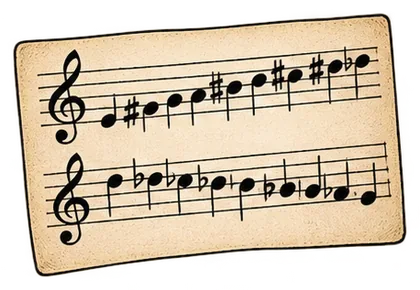
All twelve notes from C4 up to the next C, one half step at a time. Going up, the in-between notes are written as sharps; coming down they are usually written as flats (A♯ going up is the same note and fingering as B♭ coming down). Every other note is on the full recorder chart. The chromatic scale guide covers full-range scales for honor band auditions.
Scales in band order for recorder
Start with G major, whose only sharp is F♯, then C major and F major. Recorder reads in C, so these names are what you see on the page. One recorder tip: when a scale climbs into the second octave, the step from D5 to E5 brings in the thumb half-hole. Practice that one move slowly before playing the whole scale at speed.
School bands usually learn concert-pitch scales in the order below, adding flats first. The written key is what this instrument reads and fingers.
| Band calls it | You play | Key signature |
|---|---|---|
| Concert B♭ | B♭ major | 2 flats |
| Concert E♭ | E♭ major | 3 flats |
| Concert F | F major | 1 flat |
| Concert A♭ | A♭ major | 4 flats |
| Concert C | C major | no sharps or flats |
| Concert D♭ | D♭ major | 5 flats |
| Concert G | G major | 1 sharp |
| Concert G♭ | G♭ major | 6 flats |
Worked example: the concert B♭ scale
Most bands warm up on the concert B♭ major scale first. On recorder that is the same B♭ major you read, sounding an octave higher. Its notes are B♭, C, D, E♭, F, G, A, B♭, with 2 flats in the key signature. Find each one on the scale below, play it slowly with the play button as a guide, then use the scale button to hear the whole octave at an even tempo.
How to practice a scale
Play it slowly enough that every note is correct the first time, with a metronome or the play button. Tongue each note, then slur the whole octave in one breath. Raise the tempo only after three clean runs in a row. The home practice routine guide shows how to fit scales into a 20-minute session.
Common questions
How many scales should a beginning recorder player know?
Most first-year bands work on concert B♭, E♭ and F, which on recorder are written B♭, E♭ and F major. Second-year players usually add concert A♭, C and D♭. All twelve are on this page for when you need them.
Why does the scale name here differ from what my director says?
Your director names scales by concert pitch, the pitch a piano plays. The recorder reads at concert pitch, so the names match, though it sounds an octave higher.
 AuditionsThe Chromatic Scale for Band AuditionsWhat real audition sheets ask for, and how to get every half step clean and even by audition day.Read the guide →
 Reading musicHow to Read MusicThe staff, clefs, key and time signatures, rhythm counting and the other marks in a band part, with one short line read and counted note by note.Read the guide →