
Recorder · treble clef
Recorder Fingering Chart
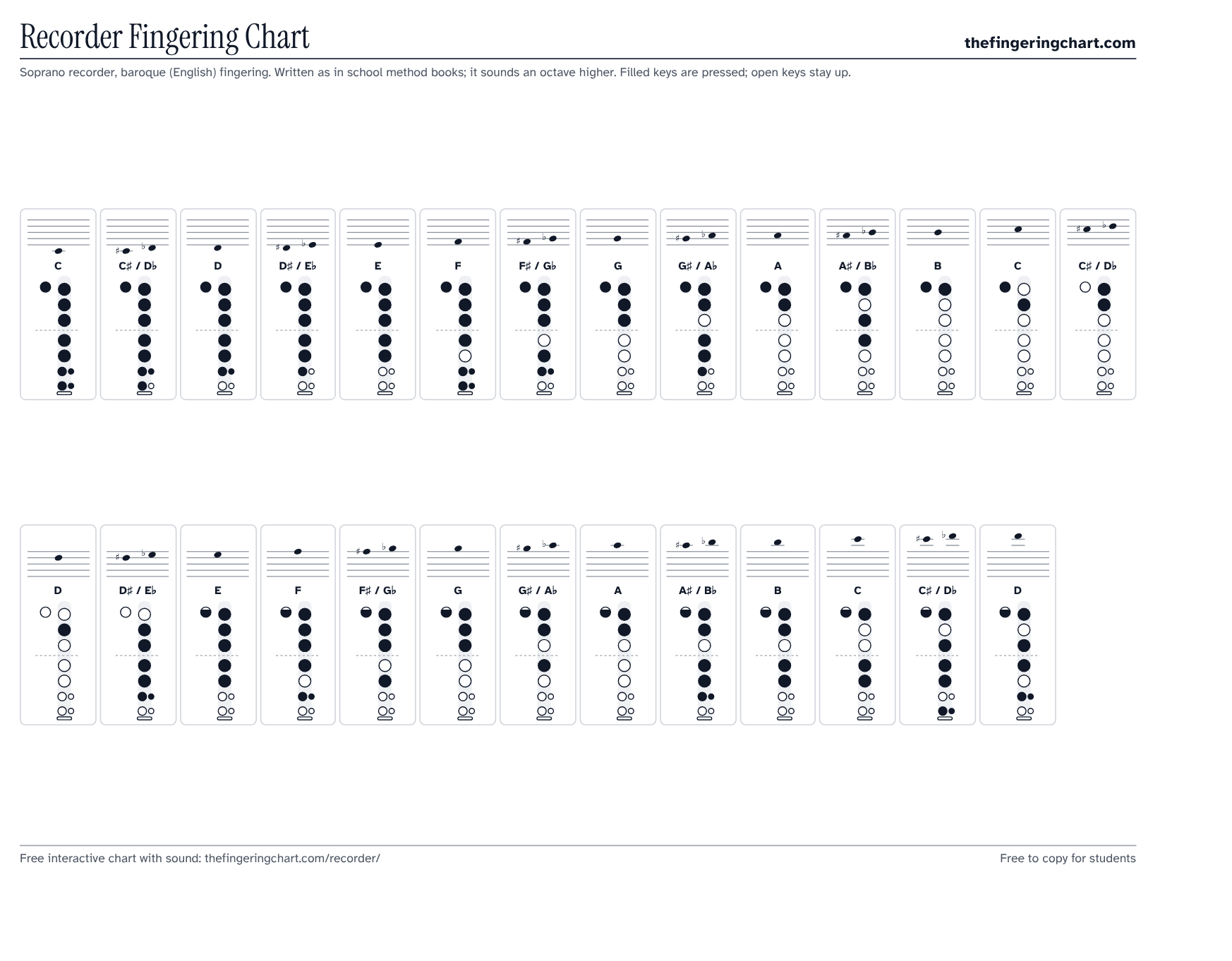
Most school recorder lessons start with B, A and G, and this chart covers those and every other note on a soprano recorder: 27 notes from low C up to high D. It is set up for students in elementary music classes, their parents, and adults returning to the recorder. Fingerings shown are baroque (English) fingerings, which most school recorders use.
Soprano recorder, baroque (English) fingering. Written as in school method books; it sounds an octave higher.
 Free 76-page recorder book: every note, all 12 scales and 28 songs, ready to print. Get the free PDF
First octave
Cover every hole completely and blow very gently.
Cover only the larger of the two bottom holes.
Like low C with the pinky lifted.
Cover only the larger of the two holes under the right ring finger.
Fork fingering: lift only the right middle finger.
Like D with the right first finger lifted.
Left ring finger up; the right ring finger covers only the larger of its two holes.
Skip the left middle finger.
Second octave
Thumb off; first two fingers down.
Thumb off; only the left middle finger stays down.
Thumb and left first finger off; the other fingers stay down, but keep the right pinky up.
Pinch the thumb: bend it so a small gap opens at the top of the thumb hole.
Like low F with the thumb pinched and the pinky up: right middle finger up, right ring finger down.
Pinched thumb; only the right middle finger stays down.
Same as low G with the thumb pinched; blow a little faster.
Same as A with the thumb pinched; keep the thumb gap small.
Third octave
Small thumb gap and fast, steady air.
The hardest note on the recorder, and this fingering can be out of tune on some recorders. If it is, sit down and use the alternate: high D fingering with the end of the recorder closed against your knee.
Free book
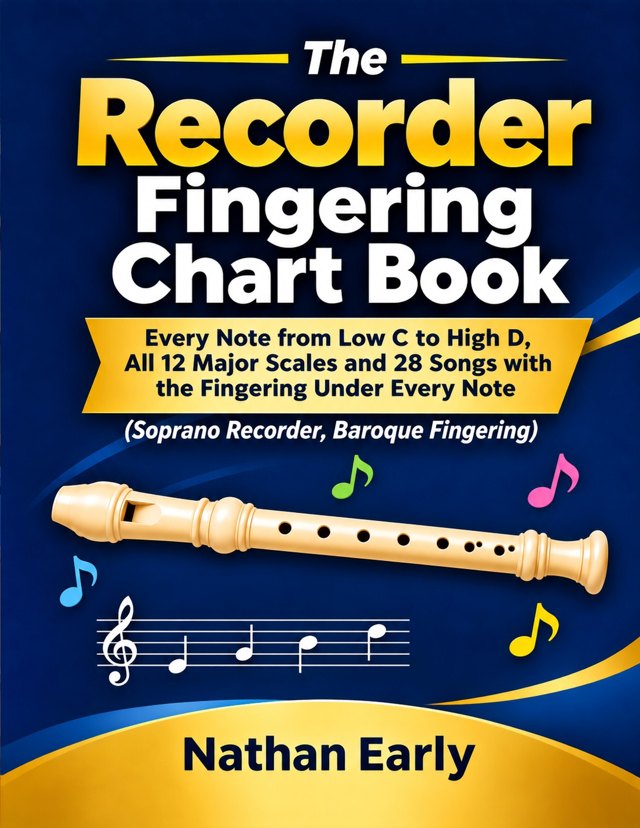
The Recorder Fingering Chart Book
Every note from low C to high D with its fingering, all 12 major scales, and 28 songs with the fingering under every note. 76 pages.
Download the free PDFPrint it yourself
- At home: print it double-sided (flip on the long edge) and put it in a binder or folder. On A4 paper, choose “fit to page”.
- At a print shop: take the file to Staples, Office Depot, FedEx Office or a local shop and ask for black-and-white, double-sided, coil bound.
- Teachers: you may print this book and copy it for yourself and your students. Please don’t sell it or post the file on other sites; link to this page.
Want a cover for the binder? Print the color cover page (it uses a lot of ink).
Squeaking
Blow softer, and check for gaps under fingers. Use the flat pad of each finger rather than the tip.
Low notes come out high
Low C, D and E need very gentle air and every hole fully covered, including both small holes at the bottom.
High notes won't sound
Use the thumb half-hole for E5 and up. Open only a small gap at the top of the thumb hole, not the whole hole.
- F sounds wrong. Your recorder may be a German-system model. This chart uses baroque F, with the right middle finger lifted.
Range and where to start
The chart covers written C4 to D6. A soprano recorder sounds one octave higher than written, so written C4 sounds C5, about 523 Hz. Written music stays inside the staff this way. The play buttons give sounding pitch. Notes from E5 up need the thumb half-hole. Nearly every class starts with B, A and G (B4, A4 and G4), which use only the left hand, then adds C and D above, then low E and D with the right hand.
Worked example
B4 is on the middle line of the staff, and it is usually the first note taught. The diagram shows only two filled circles: the thumb hole T and the left index finger. Cover the back hole with your left thumb and the top front hole with your left index finger, and leave every other hole open. Hold the recorder with your right thumb under the back, between the fourth and fifth holes. Blow gently, as if saying a soft "too". B4 sounds B5, about 988 Hz. If it squeaks, you are blowing too hard. Tap the card to see an alternate fingering that uses the left middle and ring fingers. It makes the move from B to C easier.
Common questions
What are the first notes on recorder?
Most classes start with B, A and G, played by the left hand alone. B is thumb and first finger, A adds the middle finger, and G adds the ring finger. Songs like Hot Cross Buns use only these three notes. After those, students usually learn C and D above them.
What is the difference between baroque and German recorder fingering?
The two systems differ mainly in how you finger F. German recorders have a simpler F, but some other notes become harder to play in tune. Most school recorders today are baroque. If the box or model name says German, use a German fingering chart for F and the notes near it.
Why does the recorder sound higher than the written note?
The soprano recorder is written an octave lower than it sounds to keep the notes inside the staff. Written C4 on this chart sounds C5. That is why the play button sounds higher than the same note on a piano.
Keep going
Once the notes on this chart feel familiar, put them to work: the recorder scales page has all twelve major scales, and the easy recorder songs use the first notes most band books teach, and the recorder Christmas songs page has 14 carols with letter notes and words. For Veterans Day, Memorial Day and the Fourth of July, the recorder patriotic songs page has Taps and 6 more.
Printable recorder chart
 Reading musicHow to Read MusicThe staff, clefs, key and time signatures, rhythm counting and the other marks in a band part, with one short line read and counted note by note.Read the guide →
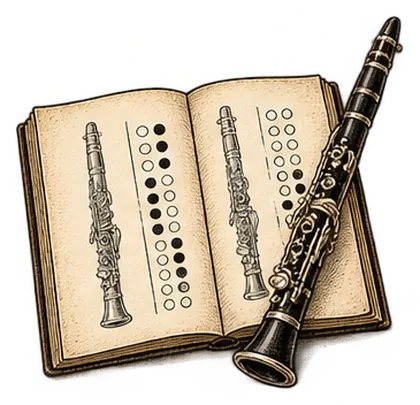 Reading chartsHow to Read a Fingering ChartWhat the circles, numbers and labels on a woodwind or brass chart mean, and how to turn a diagram into a note you can play.Read the guide →
 PracticeA Home Practice Routine That Actually WorksHow long to practice, what to do with each minute, and how to take a hard passage from slow to performance tempo in a week.Read the guide →
Gear for recorder players
As an Amazon Associate we earn from qualifying purchases. These are paid links that search Amazon; prices are the same for you. Disclosure.