
Holiday music
Christmas Songs for Band Instruments
Fourteen public-domain carols arranged for 17 band instruments, with the letter names, the words, the fingering for every note and a play-along melody. Every band instrument plays them in the same concert key, so a mixed group can read their own pages and play together.
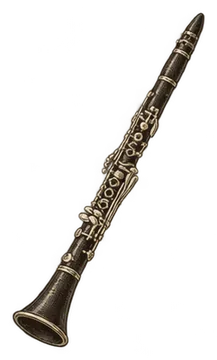
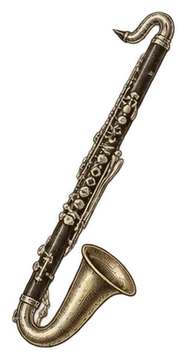
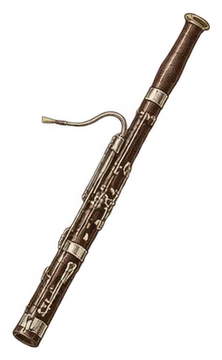
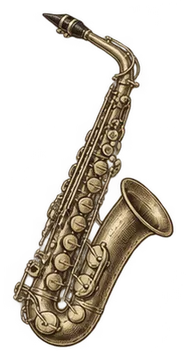
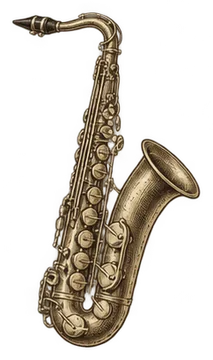
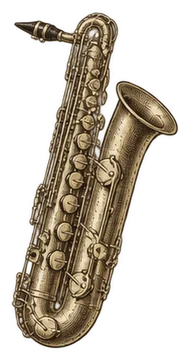
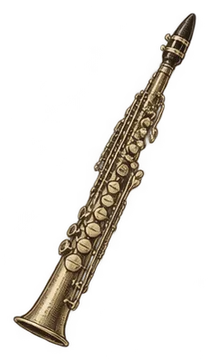
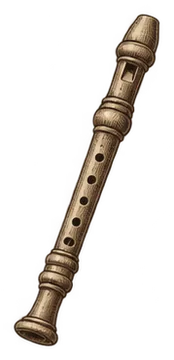
The carols are listed from easiest to hardest. Level is based on how many different notes each one needs, its range, and its fastest rhythm. Range is the distance from the lowest to the highest note.
| # | Carol | Level | Band key | Notes | Range |
|---|---|---|---|---|---|
| 1 | Jolly Old Saint Nicholas | Easy | Concert B♭ | 6 | sixth |
| 2 | Good King Wenceslas | Easy | Concert B♭ | 8 | octave |
| 3 | Up on the Housetop | Easy | Concert B♭ | 6 | sixth |
| 4 | Away in a Manger | Easy | Concert B♭ | 8 | octave |
| 5 | Auld Lang Syne | Medium | Concert B♭ | 7 | ninth |
| 6 | The First Noel | Medium | Concert B♭ | 8 | octave |
| 7 | O Come, All Ye Faithful | Medium | Concert B♭ | 8 | octave |
| 8 | Joy to the World | Medium | Concert B♭ | 8 | octave |
| 9 | O Christmas Tree | Medium | Concert B♭ | 8 | ninth |
| 10 | We Wish You a Merry Christmas | Medium | Concert B♭ | 8 | octave |
| 11 | Deck the Halls | Harder | Concert B♭ | 10 | minor ninth |
| 12 | Hark! The Herald Angels Sing | Harder | Concert B♭ | 9 | ninth |
| 13 | Angels We Have Heard on High | Harder | Concert B♭ | 7 | ninth |
| 14 | Silent Night | Harder | Concert F | 11 | eleventh |
Every instrument, one concert key
A B♭ clarinet, an E♭ alto saxophone and an F horn each read a different written key to sound the same pitch. Each instrument page here is already transposed, so the director only needs to hand each player the page for their instrument. Thirteen carols sound in concert B♭, the key most first-year band books start in. Silent Night sounds in concert F, because in B♭ its range would push at least one instrument out of its easy notes. The transposition chart explains the relationship for any key.
| Instrument | Most carols written in | Silent Night written in |
|---|---|---|
| Flute | B♭ major | F major |
| Piccolo | B♭ major | F major |
| Oboe | B♭ major | F major |
| Clarinet | C major | G major |
| Bass Clarinet | C major | G major |
| Bassoon | B♭ major | F major |
| Alto Sax | G major | D major |
| Tenor Sax | C major | G major |
| Bari Sax | G major | D major |
| Soprano Sax | C major | G major |
| Recorder | G major | C major |
| Trumpet | C major | G major |
| Mellophone | F major | C major |
| French Horn | F major | C major |
| Trombone | B♭ major | F major |
| Euphonium | B♭ major | F major |
| Tuba | B♭ major | F major |
Ideas for a holiday program
For a first-year group, the first four carols use the fewest notes and give everyone a part that sits in the lower, easier part of the range. Add Auld Lang Syne as a closer if the concert falls near New Year. Second-year players can handle the whole list; Angels We Have Heard on High is a good test of a group’s breath control because of its long Gloria run, and Silent Night tests soft, steady tone. Each instrument page has a play-along melody at full and slow speed for home practice.
Each instrument has a free printable version: all fourteen carols with the letter notes and words on US Letter pages, and a last page with the fingering for every note the carols use. Teachers are welcome to copy them for students.
Jolly Old Saint Nicholas
The words began as a poem by Emily Huntington Miller, printed as “Lilly’s Secret” in The Little Corporal magazine in December 1865. The tune is generally credited to James R. Murray and was first printed in 1874, in a school songbook called School Chimes. Source: Jolly Old Saint Nicholas, Wikipedia.
Words: Emily Huntington Miller (1865). Music: attributed to James R. Murray (1874).
Good King Wenceslas
John Mason Neale wrote the words in 1853 to fit a 13th-century spring carol, “Tempus adest floridum”, which he and his music editor Thomas Helmore found in the 1582 Finnish collection Piae Cantiones. The story follows a tenth-century ruler of Bohemia who braves deep snow on the Feast of Stephen to give alms to a poor man. Source: Good King Wenceslas, Wikipedia.
Words: John Mason Neale (1853). Music: “Tempus adest floridum”, from Piae Cantiones (1582).
Up on the Housetop
Benjamin Hanby wrote both the words and the tune in 1864. William Studwell’s Christmas Carol Reader calls it the second-oldest secular Christmas song after Jingle Bells (1857), and it is often described as the first Christmas song built around Santa Claus. Source: Up on the Housetop, Wikipedia.
Words and music: Benjamin Hanby (1864).
Away in a Manger
The words first appeared in American publications in the early 1880s, where they were wrongly credited to Martin Luther; the carol is now thought to be wholly American. This is the tune most Americans know, James Ramsey Murray’s from 1887. In Britain the same words are usually sung to William J. Kirkpatrick’s 1895 tune. Source: Away in a Manger, Wikipedia.
Words: anonymous (1880s, American). Music: “Mueller” by James Ramsey Murray (1887).
Auld Lang Syne
Robert Burns wrote the poem in Scots in 1788, building on an older folk song, and in 1799 it was set to the traditional pentatonic tune used today. The title means roughly “old long since”, or “for the sake of old times”, and it is sung at midnight on New Year’s Eve. Source: Auld Lang Syne, Wikipedia.
Words: Robert Burns (1788). Music: traditional Scottish.
The First Noel
A carol of Cornish origin, first printed in its present form in the 1820s and 1830s, in carol collections edited by Davies Gilbert and William Sandys. The melody is one phrase sung twice and then a refrain that varies it, and every one of those phrases ends on the same note, the third of the scale. Source: The First Noel, Wikipedia.
Words and music: traditional English (Cornish), first printed in the 1820s.
O Come, All Ye Faithful
The Latin original, “Adeste Fideles”, is most often credited to John Francis Wade, whose manuscript from 1751 survives at Stonyhurst College in Lancashire. Frederick Oakeley translated it into English in 1841 as “Ye Faithful, approach ye”, and the wording sung today, beginning “O come, all ye faithful”, was first printed in 1852. Source: O Come, All Ye Faithful, Wikipedia.
Words: Latin hymn “Adeste Fideles”, English by Frederick Oakeley (1841, current wording printed 1852). Music: attributed to John Francis Wade.
Joy to the World
Isaac Watts wrote the words in 1719 as a Christian reading of Psalm 98. The tune is Lowell Mason’s arrangement of a melody attributed to Handel, and since the 20th century it has been the most-published Christmas carol in North America. Source: Joy to the World, Wikipedia.
Words: Isaac Watts (1719). Music: “Antioch”, arranged by Lowell Mason.
O Christmas Tree
“O Tannenbaum” grew out of a German folk song. The words in use today were written by Ernst Anschütz, a Leipzig teacher and organist, and published in 1824, and the tune came from an old student song, “Lauriger Horatius”. Several American state songs borrowed the melody, among them Maryland’s former state song and “The Song of Iowa”. Source: O Tannenbaum, Wikipedia.
Words: Ernst Anschütz (1824), shown in the original German. Music: traditional German.
We Wish You a Merry Christmas
An English carol from the West Country of England, where “figgy pudding”, the treat its carolers ask for, meant a plum pudding. The version everyone knows spread from Arthur Warrell’s 1935 arrangement for the University of Bristol Madrigal Singers; the tune itself is traditional. Source: We Wish You a Merry Christmas, Wikipedia.
Music: English traditional (West Country). Words not shown.
Deck the Halls
The melody is Welsh, from a New Year’s carol called “Nos Galan” that was first printed in 1794. Thomas Oliphant wrote English words for it in 1862, and the December 1877 Pennsylvania School Journal printed the version with “Don we now our gay apparel” that most people sing today. Source: Deck the Halls, Wikipedia.
Words: Thomas Oliphant (1862), as revised in 1877. Music: Welsh traditional (“Nos Galan”).
Hark! The Herald Angels Sing
Charles Wesley wrote the hymn in 1739, and George Whitefield later changed its opening to the familiar “Hark! the herald angels sing”. Since the mid-1800s it has been sung to a melody from Felix Mendelssohn’s 1840 Festgesang, written for the 400th anniversary of the printing press. Source: Hark! The Herald Angels Sing, Wikipedia.
Words: Charles Wesley (1739), altered by George Whitefield. Music: Felix Mendelssohn (1840).
Angels We Have Heard on High
The English words are James Chadwick’s paraphrase of a traditional French carol, “Les Anges dans nos campagnes”. The tune is called “Gloria”, and its chorus is famous for stretching the “o” of “Gloria” across 16 notes that rise and fall in a sequence. Source: Angels We Have Heard on High, Wikipedia.
Words: James Chadwick (1862), after the French carol “Les Anges dans nos campagnes”. Music: “Gloria”, French traditional.
Silent Night
Franz Xaver Gruber composed the melody for Joseph Mohr’s words, and the two first performed it at Christmas Eve mass in 1818 in Oberndorf bei Salzburg, Austria. The English words most people sing are John Freeman Young’s 1859 translation, and UNESCO recognized the song as intangible cultural heritage in 2011. Source: Silent Night, Wikipedia.
Words: Joseph Mohr (1816), English by John Freeman Young (1859). Music: Franz Xaver Gruber (1818).
Common questions
Which Christmas song is easiest for a beginner?
Jolly Old Saint Nicholas. On most instruments it uses six notes close together, and each line starts by repeating one note four times. Good King Wenceslas is a close second because almost every note is a quarter note or longer.
Will a flute, a clarinet and a trumpet sound right together?
Yes, if each player reads the page for their own instrument. All the band versions are arranged to sound in the same concert key: concert B♭ for thirteen carols and concert F for Silent Night. The written keys differ because clarinet, saxophone, trumpet and horn are transposing instruments.
Why does the recorder page use different keys?
Soprano recorder is easiest in G and C major, so its versions use those keys. A recorder playing these will not match the band versions; to play together with a band instrument, use the flute or oboe page, which is at concert pitch, and agree on a key.
Are the carols in the public domain?
Yes. The melodies are traditional or were published in the 1800s or earlier, and every set of words shown was in print before 1929. We Wish You a Merry Christmas is shown without words because the version most people know was first published in 1935.
Christmas music for band
As an Amazon Associate we earn from qualifying purchases. These are paid links that search Amazon; prices are the same for you. Disclosure.