Mellophone · treble clef
Mellophone Fingering Chart
Every note on the mellophone, from low F♯ to high C. If you know trumpet, you already know these fingerings.
Written pitch, mellophone in F. A written C sounds as concert F. The fingerings match the trumpet’s.
Low notes
Lowest standard note. It plays sharp: lip it down, or push the first valve slide out if your mellophone has a trigger or saddle on that slide.
This fingering plays sharp. Lip it down, or push the first valve slide out if your mellophone has a trigger or saddle on that slide.
Middle notes
Open, no valves.
This fingering plays sharp. Lip it down, or push the first valve slide out if your mellophone has a trigger or saddle on that slide.
This fingering plays sharp. Lip it down, or push the first valve slide out if your mellophone has a trigger or saddle on that slide.
Open, the same as low C. Faster air and firmer lips raise the pitch.
High notes
Open, the same as low C and G, one step higher in the overtone series.
Open fingering on the top space. It can sit a little flat; listen and adjust.
Printable chart
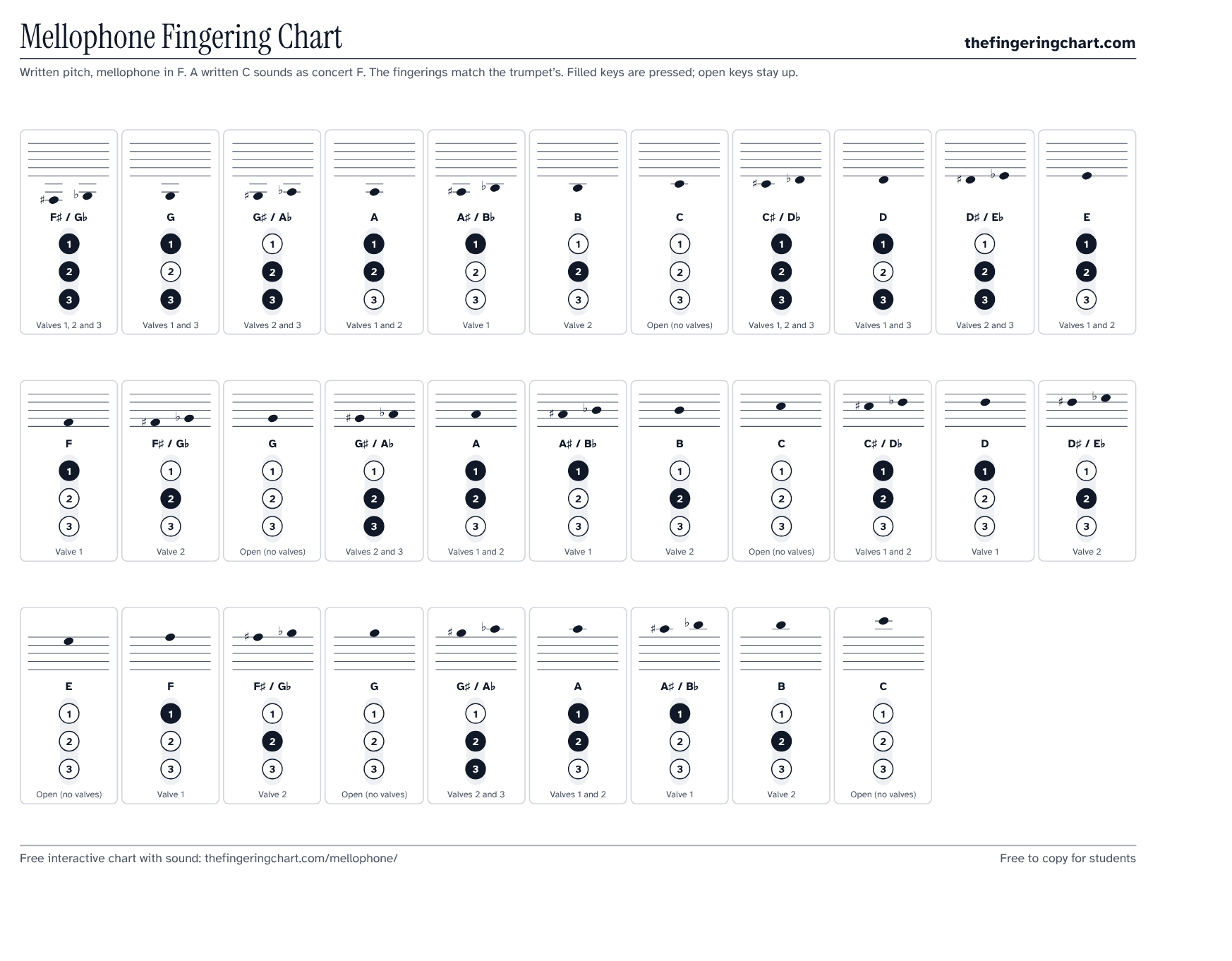
How to read this chart
Valve 1 is the one under your first finger. Filled valves are pressed down; “Open” means no valves.
Many notes share the same valves. Your air and lips choose which one sounds.
Which notes come first
Marching mellophone parts mostly sit between the C below the staff and the G on top of it.
Next: Mellophone scales