
Soprano Sax · treble clef
Soprano Sax Fingering Chart
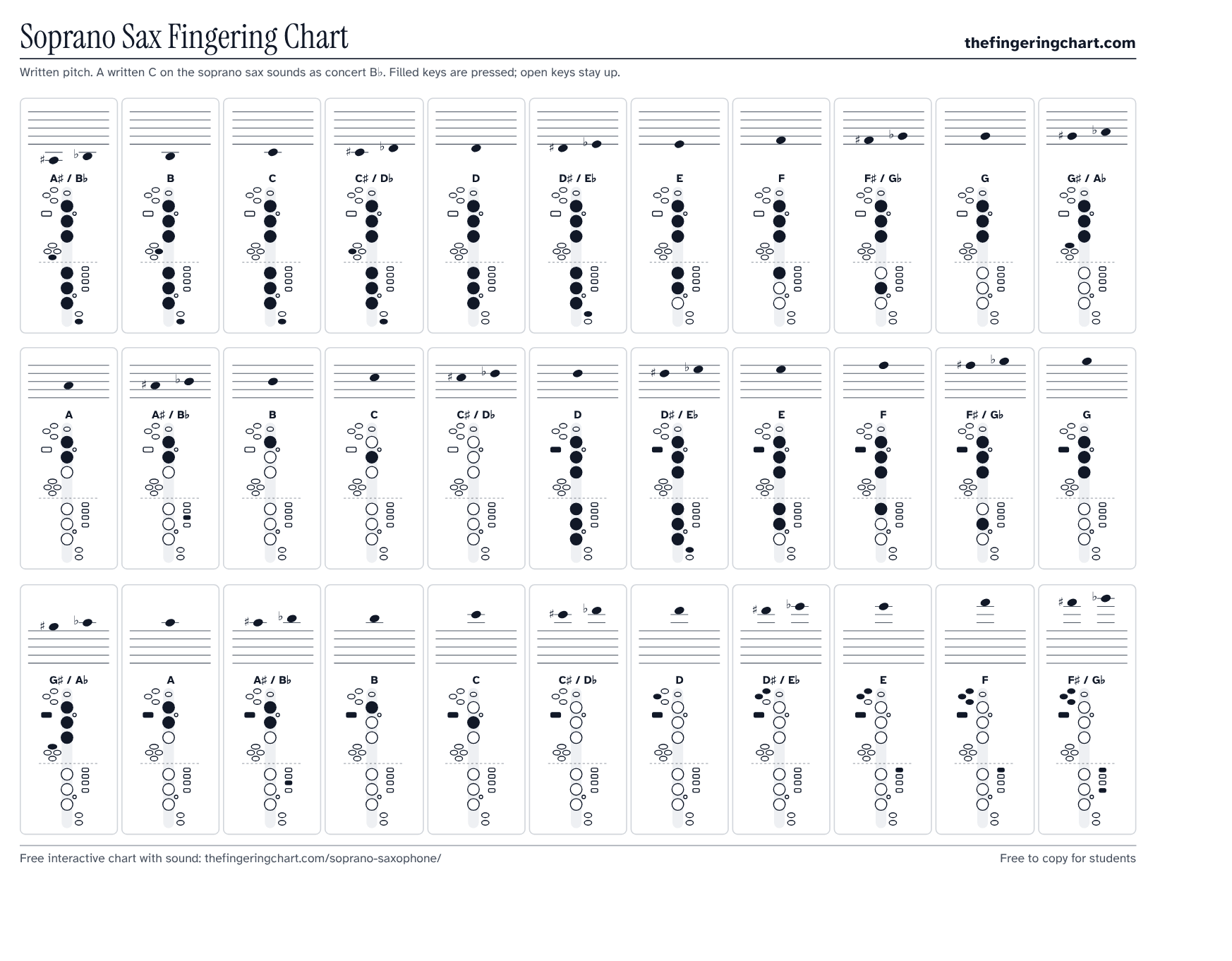
This soprano saxophone chart shows 33 notes from low B♭ to high F♯, with the same written fingerings as alto and tenor. Players who double from alto or tenor, and students handed a soprano for jazz band, can use it to check notes in the upper register, where soprano tuning takes the most attention. Like the clarinet and trumpet, soprano is pitched in B♭.
Written pitch. A written C on the soprano sax sounds as concert B♭.
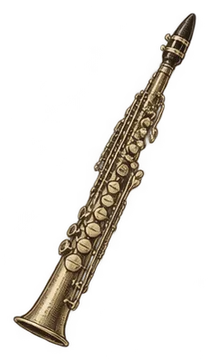
 Free 70-page soprano sax book: every note, all 12 scales and 28 songs, ready to print. Get the free PDF
Low register
Lowest note on soprano: use slow, relaxed air and keep the right pinky on low C.
Use the alternate F♯ key when moving quickly between F and F♯.
Side B♭ (shown) is the standard fingering; use it next to B natural and in chromatic passages. Use the bis key when there is no B natural nearby, and one-and-one when moving between F and B♭.
Side C is easier when moving between B and C.
No keys pressed; this open note can sound thin, so keep steady air.
Upper register (octave key)
Same fingering as low D, plus the octave key.
Only the octave key is pressed.
Palm key notes
First palm key note: press the D palm key with the base of your left index finger.
Uses the high F♯ key. If your soprano has no high F♯ key, use the front F + side B♭ alternate.
Free book
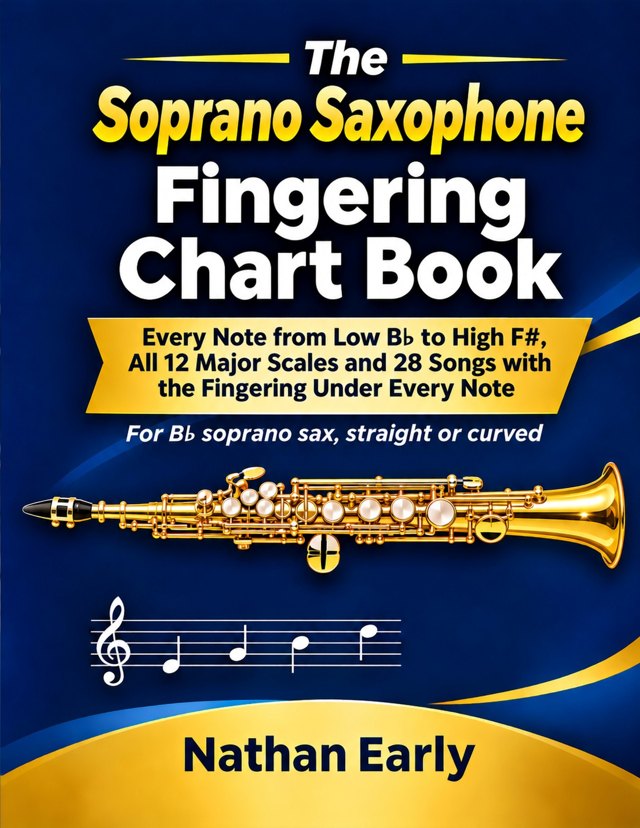
The Soprano Saxophone Fingering Chart Book
Every note from low B♭ to high F♯ with its fingering, all 12 major scales, and 28 songs with the fingering under every note. 70 pages.
Download the free PDFPrint it yourself
- At home: print it double-sided (flip on the long edge) and put it in a binder or folder. On A4 paper, choose “fit to page”.
- At a print shop: take the file to Staples, Office Depot, FedEx Office or a local shop and ask for black-and-white, double-sided, coil bound.
- Teachers: you may print this book and copy it for yourself and your students. Please don’t sell it or post the file on other sites; link to this page.
Want a cover for the binder? Print the color cover page (it uses a lot of ink).
Notes are sharp
Stop biting and loosen the embouchure first. If the whole horn is still sharp, pull the mouthpiece out slightly.
Palm key notes are thin
Keep the throat open and the air steady on D6 and above. Check that the palm keys close fully when released.
Low B♭ and B won't speak
Use slow, relaxed air and keep the right pinky on low C for low B♭, as the card shows.
Range and where to start
This chart goes from written A♯3 (low B♭) to F♯6. The soprano saxophone is in B♭ and sounds a whole step lower than written, so written low B♭ sounds A♭3, about 208 Hz, and written C sounds concert B♭. That is the same transposition as the clarinet and trumpet, so a soprano player can read clarinet or trumpet parts directly. On the chart, the octave key comes in at written D5 and the palm keys at D6, the same places as on alto.
Worked example
Open C5, the C on the third space of the treble staff. The diagram shows one filled button: the left middle finger. Press it and leave everything else up. Written C5 sounds concert B♭4, about 466 Hz, the band's tuning note. Play it into a tuner. Soprano is touchy about pitch, and a small change in how much mouthpiece you take in moves the note a lot. If it is sharp, loosen the lips and let the jaw drop slightly before moving the mouthpiece. Tap the card for the side C alternate (left index finger plus the side C key), which is easier when moving between B and C.
Common questions
Is soprano sax fingering the same as alto?
Yes. All saxophones share the same written fingerings, so a written G on soprano uses the same buttons as a written G on alto or tenor. What changes is the transposition and the feel. Soprano needs a smaller mouthpiece position and closer attention to tuning. You can check fingerings on the alto sax chart too.
What key is the soprano saxophone in?
The common soprano saxophone is in B♭, so it sounds a whole step lower than written, like the clarinet and trumpet. A written C sounds concert B♭. Tenor is also in B♭, but sounds an octave lower than the soprano.
Is soprano sax hard to play in tune?
Most players find it harder to tune than alto or tenor. Small changes in embouchure and air move the pitch more on soprano. Practicing with a tuner on long tones and scales helps. The tuning guide covers how to do that.
Keep going
Once the notes on this chart feel familiar, put them to work: the soprano sax scales page has all twelve major scales, and the easy soprano sax songs use the first notes most band books teach, and the soprano sax Christmas songs page has 14 carols with letter notes and words. For Veterans Day, Memorial Day and the Fourth of July, the soprano sax patriotic songs page has Taps and 6 more.
Printable soprano sax chart
 SaxophoneHow to Put a Saxophone Together and Take It ApartThe order that keeps the octave key safe, where the reed goes, and a quick test that tells you everything is working.Read the guide →
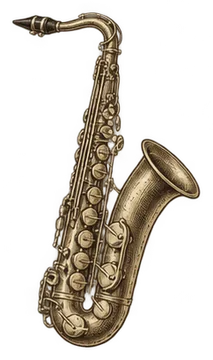
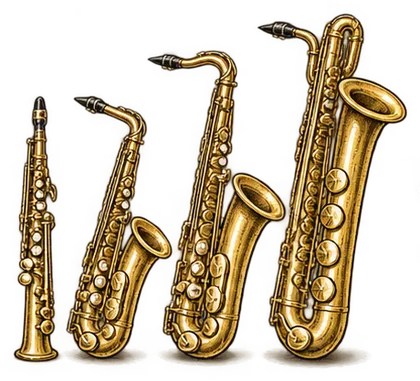 SaxophoneSoprano, Alto, Tenor and Baritone Saxophones ComparedThe four saxophones in a school band share one set of fingerings, so what changes from one to the next is the size of the horn and what it asks of your embouchure and air.Read the guide →
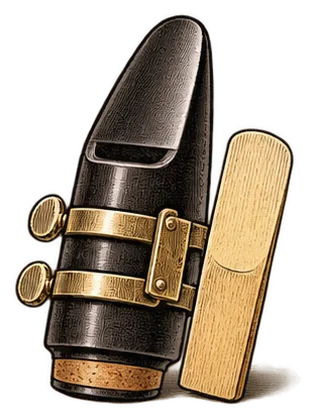 Clarinet and saxWhy Your Clarinet or Saxophone SqueaksHow to tell a reed, embouchure or finger problem from a leak or a bent key, with two real squeaks traced step by step.Read the guide →
Gear for soprano sax players
- Soprano sax reeds
- Soprano sax neck strap
- Soprano sax swab
- Soprano sax method book
- Clip-on chromatic tuner
As an Amazon Associate we earn from qualifying purchases. These are paid links that search Amazon; prices are the same for you. Disclosure.