
French Horn · treble clef
French Horn Fingering Chart
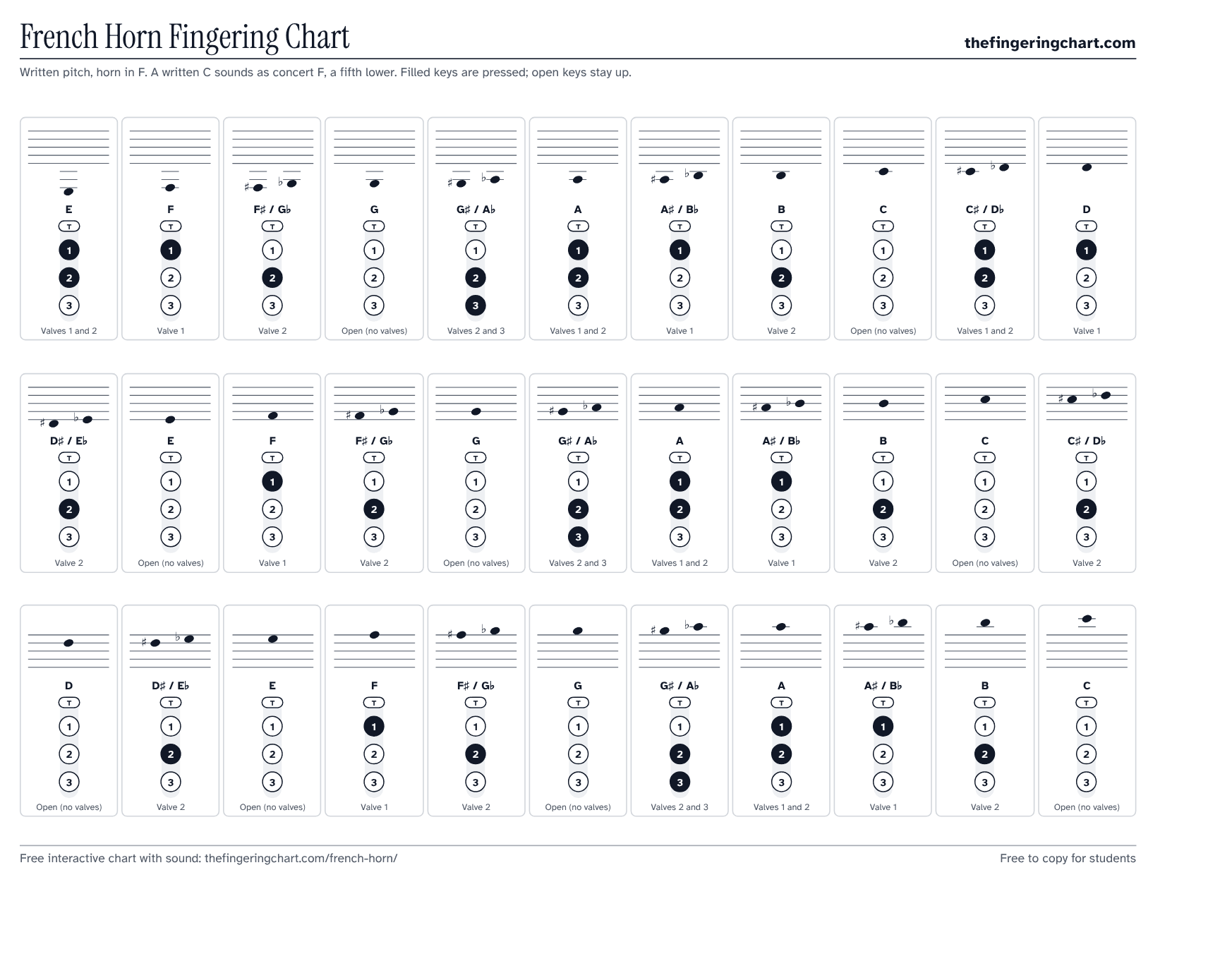
A double horn gives you two ways to finger most notes, so this chart shows both for every note from written low E to high C: the single F horn fingering, and the B♭ side for a double horn. That covers 33 cards, which is enough range for middle and high school band. Players who start on a single F horn and later move to a double can keep using it. The notes are written in F, and the play button sounds the real pitch, a fifth lower.
Written pitch, horn in F. A written C sounds as concert F, a fifth lower.
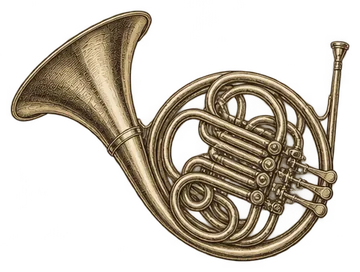
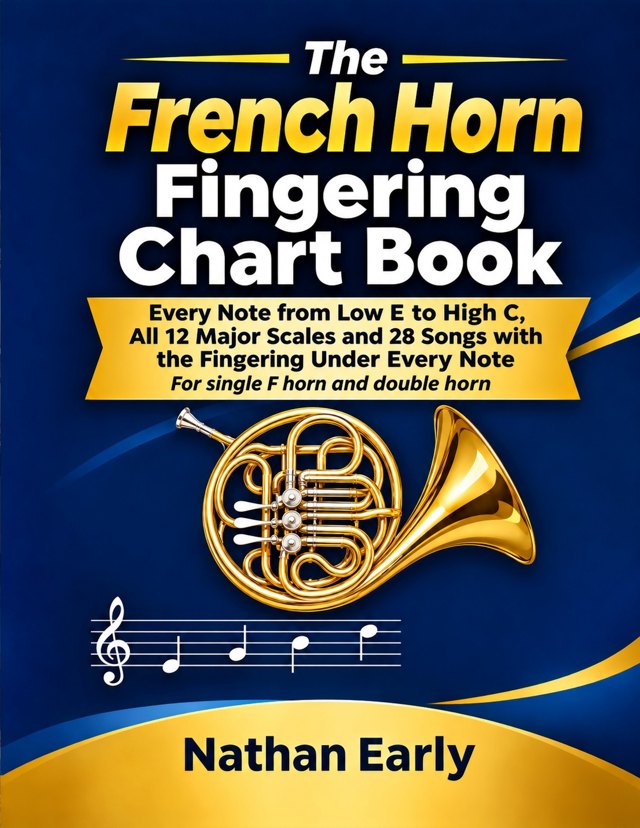 Free 68-page French horn book: every note, all 12 scales and 28 songs, ready to print. Get the free PDF
Low notes
On a double horn, low notes like this are often played on the B♭ side.
On a double horn this low F is usually played on the B♭ side, with the thumb valve and no other valves.
Low note. On a double horn this is usually played on the F side, as shown.
Open, no valves. On a double horn this is usually played on the F side.
Middle notes
Open, no valves.
Open, the same fingering as the C below and the G above. E sits between them: buzz faster than for C but slower than for G.
Open. Many double-horn players switch to the B♭ side from G♯ upward.
High notes
Open. Up here the notes sit close together, so hear the pitch before you play it.
Open fingering. Listen carefully; nearby open notes are easy to land on by mistake.
Open. Top of the standard range.
Free book
The French Horn Fingering Chart Book
Every note from low E to high C with its fingering, all 12 major scales, and 28 songs with the fingering under every note. 68 pages.
Download the free PDFPrint it yourself
- At home: print it double-sided (flip on the long edge) and put it in a binder or folder. On A4 paper, choose “fit to page”.
- At a print shop: take the file to Staples, Office Depot, FedEx Office or a local shop and ask for black-and-white, double-sided, coil bound.
- Teachers: you may print this book and copy it for yourself and your students. Please don’t sell it or post the file on other sites; link to this page.
Want a cover for the binder? Print the color cover page (it uses a lot of ink).
Cracking between notes that share a fingering
Horn notes sit close together, so hear each one before you play it. Using the play button for a new note helps your ear pick the right partial.
Right hand in the wrong place
Rest the right hand against the far side of the bell, fingers together, with the palm cupped slightly. A hand too far out makes the sound brassy and sharp; a hand too closed makes it stuffy and flat.
Thumb valve and fingers out of sync
When switching sides in the middle of a passage, move the thumb at exactly the same moment as the fingers. Practice the change slowly on a slur such as written F4 to G4.
- Low notes are fuzzy. Drop the jaw and let the lips open more for written C4 and below, and keep the air steady. Avoid pushing the mouthpiece harder on the top lip.
Range and where to start
The chart starts at written E3, below the staff, and ends at high C6. Horn reads in F: each written note sounds a perfect fifth lower, so written C5 sounds as concert F4, and the bottom E sounds as concert A2, about 110 Hz. Beginners usually start around written C5 and G4 in the staff. Horn is long tubing played on high partials, and that makes every note sit close to its neighbors. Many double horn players change to the B♭ side from about the G on the second line up, where its partials are farther apart and easier to center. The top five cards, from G♯5, are marked advanced.
Worked example
Written F4, on the first space of the treble staff, is the horn's tuning note. On the F side, the card shows valve 1 filled and the thumb valve open. Press the first valve with the left index finger. Tap play and you hear concert B♭3, about 233 Hz. Now open the enlarged card to see the alternate: the thumb valve alone, with no finger valves. On a double horn, both fingerings give the same note, so ask your teacher which one your section uses. Try both, and with a tuner, adjust the right hand in the bell. Closing the hand a little lowers the pitch, opening it raises the pitch. Tune the F side with its own slide and the B♭ side with the B♭ slide.
Common questions
What is the difference between a single F horn and a double horn?
A single F horn has one set of tubing. A double horn adds a shorter B♭ set, and a thumb valve switches between them. The B♭ side makes the upper range easier to center, and in some spots it improves tuning. Many middle school bands start players on a single F horn, then move them to doubles.
When should I use the thumb valve on a double horn?
A common rule is to switch to the B♭ side from about written G4 or G♯4 upward and use the F side below that. Teachers and players differ on the exact switch point. The chart lists both versions for every note, so you can follow what your teacher asks.
Why is French horn music written in F?
The modern horn is built in F, so the part is written a perfect fifth above the sound. Written C sounds concert F. Band pieces are often in concert B♭ or E♭, so the horn part reads in F or B♭. The transposition chart converts any note quickly.
Keep going
Once the notes on this chart feel familiar, put them to work: the French horn scales page has all twelve major scales, and the easy French horn songs use the first notes most band books teach, and the French horn Christmas songs page has 14 carols with letter notes and words. For Veterans Day, Memorial Day and the Fourth of July, the French horn patriotic songs page has Taps and 6 more.
Printable French horn chart
 French hornHow to Play Your First Notes on French HornSet the mouthpiece high on the lips, put your right hand in the bell, find an open note, then add valve 1 and valves 1 and 2 for your first song.Read the guide →
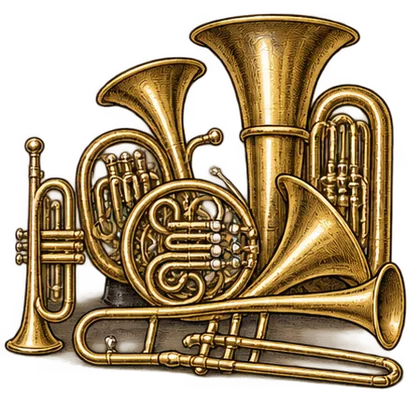 Getting startedThe Band Brass Family ComparedHow the six brass instruments in a school band differ in tubing, valves, mouthpiece and clef, and which trumpet fingerings carry over to mellophone and euphonium.Read the guide →
 TheoryConcert Pitch vs Written PitchWhy a clarinet's C is a piano's B♭, how far each band instrument transposes, and how to move a melody or key signature from one to the other.Read the guide →
Gear for French horn players
- French horn rotor oil
- French horn mouthpiece
- Brass cleaning kit
- French horn method book
- Clip-on chromatic tuner
As an Amazon Associate we earn from qualifying purchases. These are paid links that search Amazon; prices are the same for you. Disclosure.