Alto Sax · treble clef
Alto Sax Fingering Chart
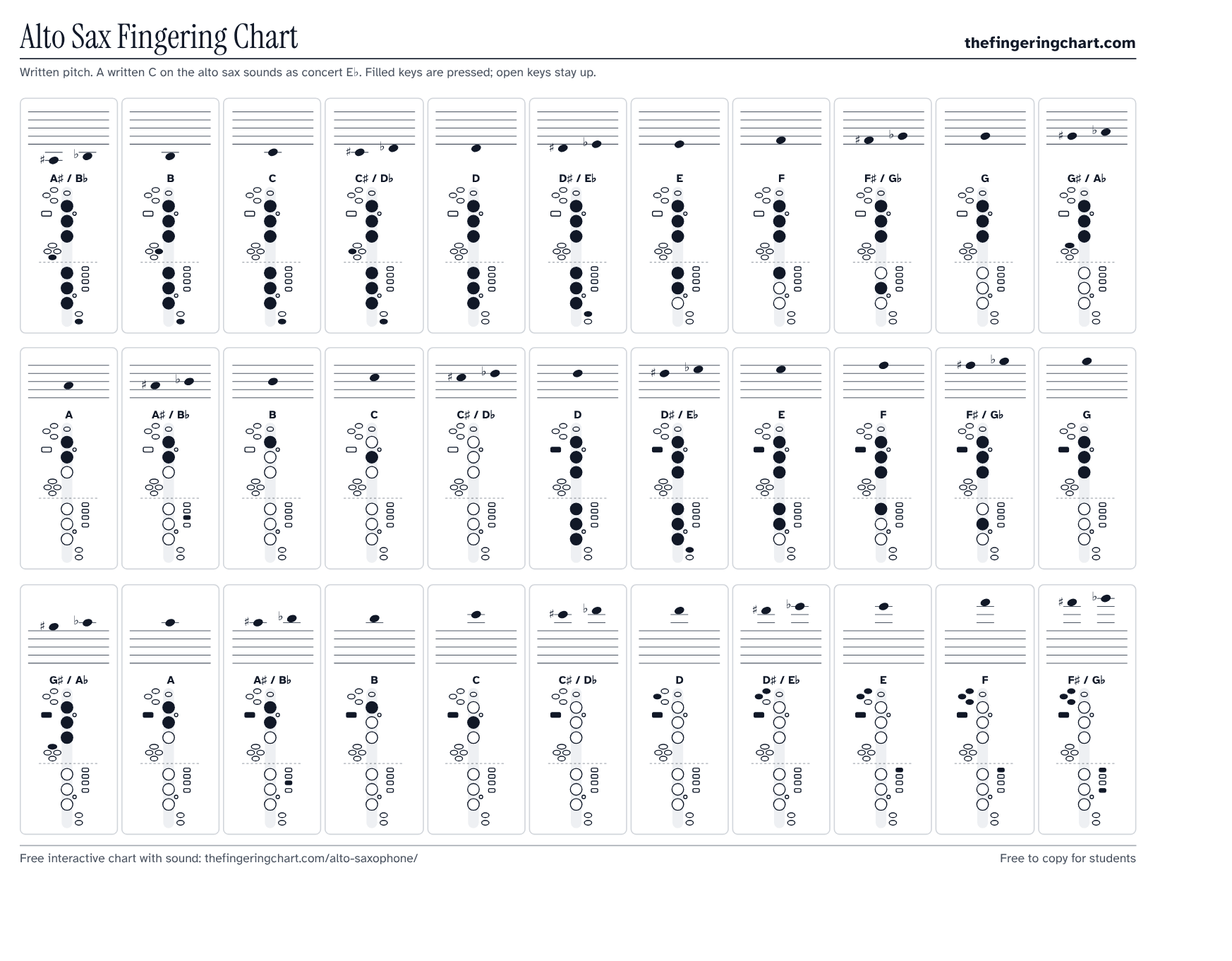
Every note on the alto saxophone, from low B♭ to high F♯. Tap a note to see it larger, hear it, and find alternate fingerings.
Written pitch. A written C on the alto sax sounds as concert E♭.
Low register
Lowest note on alto: use slow, relaxed air and keep the right pinky on low C.
Use the alternate F♯ key when moving quickly between F and F♯.
Side B♭ (shown) is the standard fingering; use it next to B natural and in chromatic passages. Use the bis key when there is no B natural nearby, and one-and-one when moving between F and B♭.
Side C is easier when moving between B and C.
No keys pressed; this open note can sound thin, so keep steady air.
Upper register (octave key)
Same fingering as low D, plus the octave key.
Only the octave key is pressed.
Palm key notes
First palm key note: press the D palm key with the base of your left index finger.
Adds the high F♯ key to the high F fingering.
Printable chart
How to read this chart
Filled keys are pressed. Open ones stay up.
The octave key (thumb) and the three palm keys are drawn to the left. The dashed line separates the left hand (top) from the right hand (bottom).
The small keys on the right are the side keys you press with the side of your right hand. The left pinky table is at the lower left.
Which notes come first
Beginners usually start around the middle of the staff, then add the low notes and the octave key. The palm-key notes at the top come later.
Next: Alto Sax scales