Bass Clarinet · treble clef
Bass Clarinet Fingering Chart
Every note on the bass clarinet, from low E♭ to the C above the staff. The fingerings match the B♭ clarinet, plus the low E♭ key.
Written in treble clef. A written C sounds as concert B♭, an octave and a step lower.
Low register (chalumeau)
Low E♭ key: the extra key at the bottom of the right-pinky group, below the E, F and G♯ keys. Cover every hole and press it.
Cover every hole fully and use lots of slow, warm air; small leaks make low notes squeak.
Finger C and add the C♯/G♯ key with the left pinky.
Thumb comes off the hole; only the first finger stays down.
Throat tones
Open G: nothing pressed, but keep your fingers close to the holes.
Press the side of the first finger against the G♯ key.
Roll the first finger up to the A key instead of lifting it.
Press the A key and the register key together; keep the right ring finger up so the correct vent opens.
Clarion register
Crossing the break: same as low E plus the register key. Seal every hole and keep the throat open; don't pinch.
Same as low F plus the register key. Voice it low, as if you were still playing low F.
Same as low F♯ plus the register key.
Same as low G plus the register key.
Same as C♯4 plus the register key.
Printable chart
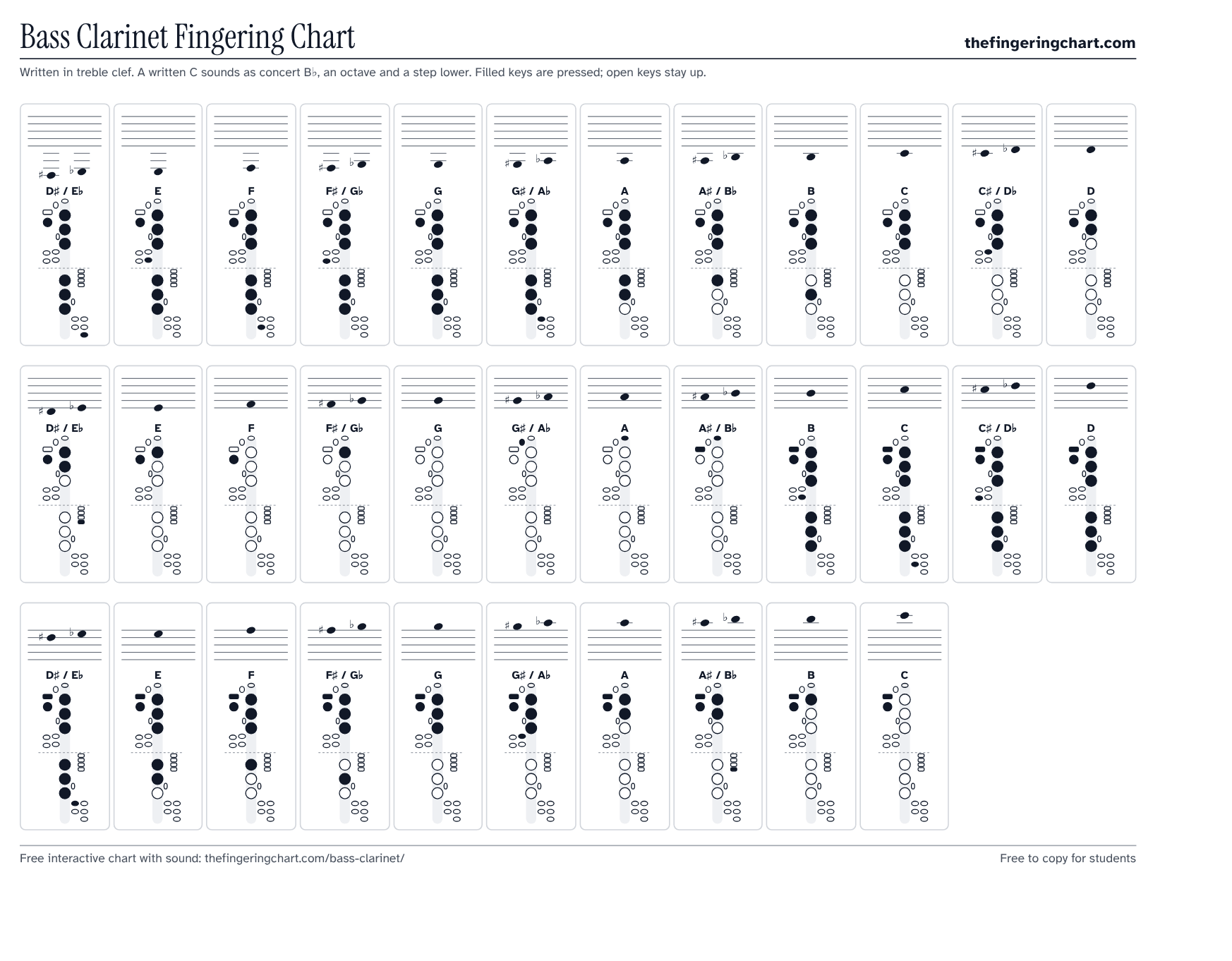
How to read this chart
Filled keys and holes are pressed or covered. Open ones stay up.
The thumb hole and register key are drawn to the left of the first finger. The dashed line separates the left hand (top) from the right hand (bottom).
The extra key at the bottom right is the low E♭ key.
Which notes come first
Clarinet players can use what they already know. Low E♭ and the throat tones are the notes that need the most attention.
Next: Bass Clarinet scales