
Bari Sax · treble clef
How to Play F♯ on Bari Sax
F♯ on the bari sax is written in the first space. It is the same note as G♭, so the fingering below works for both.
Sounds as concert A
F♯
Press: left first finger, left second finger, left third finger and right second finger.
Use the alternate F♯ key when moving quickly between F and F♯.
Alternate fingering
Nearby notes
About this note
On the baritone sax this note is written as F♯. Because the baritone sax is a transposing instrument, it sounds as concert A. The sound you hear is A2, about 110 Hz.
Where you'll meet F♯
F♯ is in the key signature of these major keys: G major, D major, A major, E major, B major, F♯ major. If your music has one of those key signatures, every F is played as F♯ unless a natural sign cancels it. You can practice it in context with the baritone sax scales.
Written F♯ on other instruments
If you switch instruments or help a section, here is the same written note on the other instruments on this site. A written note sounds at a different pitch on each transposing instrument.
| Instrument | Fingering | Sounds as |
|---|---|---|
| Alto sax | Press: left first finger, left second finger, left third finger and right second finger. | concert A |
| Bass clarinet | Cover or press: left first finger. | concert E |
| Bassoon | Cover or press: whisper key, left first finger half-holed (roll it down toward the second finger to uncover the top part of the hole), left second finger, left third finger, right thumb F♯ key, right first finger, right second finger, right third finger and right pinky F key. | As written |
| Clarinet | Cover or press: left first finger. | concert E |
| Euphonium | Valves 2 and 3. | As written |
| Flute | Press: left thumb on the B key, left first finger, left second finger, left third finger, right third finger and right pinky on the D♯ key. | As written |
| French horn | Valve 2. | concert B |
| Mellophone | Valve 2. | concert B |
| Oboe | Press: left first finger, left second finger, left third finger and right first finger. | As written |
| Piccolo | Press: left thumb on the B key, left first finger, left second finger, left third finger, right third finger and right pinky on the D♯ key. | An octave higher than written |
| Recorder | Cover or press: thumb hole, left first finger, left second finger, left third finger, right second finger and right third finger (both small holes). | An octave higher than written |
| Soprano sax | Press: left first finger, left second finger, left third finger and right second finger. | concert E |
| Tenor sax | Press: left first finger, left second finger, left third finger and right second finger. | concert E |
| Trombone | Position 5. | As written |
| Trumpet | Valve 2. | concert E |
| Tuba | Valves 2 and 3. | As written |
Tips for playing it
Many sax notes have more than one fingering. The side keys and alternate fingerings are usually easier in fast passages, while the main fingering is often better in tune for long notes. Try both against a tuner.
Always check a new note against a tuner or a reference pitch. The play button above gives you the note to match.
See every note on one page in the bari sax fingering chart.
Getting there from the notes next to it
In music, this note is usually approached from a neighbor a half step away. Here is what changes on bari sax:
- Half step below: F4. 2 keys change from this note. Press: left first finger, left second finger, left third finger and right first finger.
- Half step above: G4. 1 key change from this note. Press: left first finger, left second finger and left third finger.
Practice the move slowly between the two notes, back and forth, until both sound clean at the same volume.
Where you will play F♯4
Easy songs: Happy Birthday.
Christmas carols: Jolly Old Saint Nicholas, Good King Wenceslas, Away in a Manger, O Come, All Ye Faithful, O Christmas Tree, We Wish You a Merry Christmas, Deck the Halls, Hark! The Herald Angels Sing, Silent Night.
Patriotic songs: Yankee Doodle, My Country, 'Tis of Thee, America the Beautiful, Battle Hymn of the Republic, Anchors Aweigh, The Star-Spangled Banner.
Major scales: concert B♭, concert F, concert C, concert G, concert D, concert A, concert E. It is also in the chromatic scale.
Common questions
What does this note sound like on bari sax?
It sounds as concert A, which is the note a piano or tuner shows. The play button above plays that pitch.
Is there more than one way to finger it?
Yes. The alternate is shown above; most players use the main fingering for long notes and the alternate in fast passages where it saves a finger move.
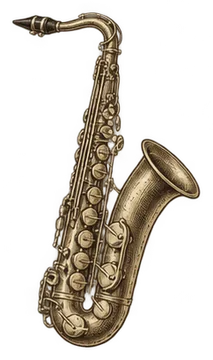 SaxophoneHow to Put a Saxophone Together and Take It ApartThe order that keeps the octave key safe, where the reed goes, and a quick test that tells you everything is working.Read the guide →
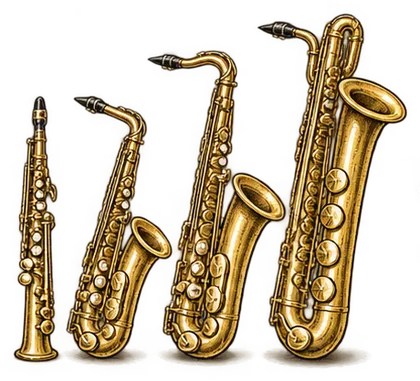 SaxophoneSoprano, Alto, Tenor and Baritone Saxophones ComparedThe four saxophones in a school band share one set of fingerings, so what changes from one to the next is the size of the horn and what it asks of your embouchure and air.Read the guide →