
Free practice tool
Bass clef note quiz
Practice naming bass clef notes: the lines G B D F A, the spaces A C E G, and the ledger-line notes down to low C and up to the E above middle C. Each note plays after you answer.
Loading the quiz…
On a computer you can also type the letters A to G. With sharps and flats on, press - for flat or # for sharp before the letter.
Also try the treble clef quiz or the bass clef quiz, or go back to the main note quiz.
The bass clef notes
Bass clef is also called the F clef, because its two dots sit either side of the fourth line, which is F below middle C. The lines from bottom to top are G, B, D, F and A (Good Boys Do Fine Always), and the spaces are A, C, E and G (All Cows Eat Grass).
Above the staff, B sits in the space just over the top line, middle C is on the first ledger line, D is just above that line, and E is on the second ledger line. Below the staff, F sits in the space under the bottom line, E is on the first ledger line, D is just below it, and low C is on the second ledger line. Switch on Ledger lines too to practice these.
Who reads bass clef
On this site: bassoon, trombone, euphonium, tuba. Bassoon and trombone players also read tenor clef for high passages once they get further along.
Tips
Learn F (fourth line), middle C (one ledger line above) and the G on the bottom line by sight, then read neighboring notes as one step away. Low brass and bassoon parts spend a lot of time below the staff, so add ledger lines as soon as the staff notes feel easy.
Common questions
Is this quiz free?
Yes, with no sign-up. It works on phones, tablets and computers.
Can I add sharps and flats?
Yes. Turn on sharps and flats, then pick ♭ or ♯ before the letter when the note has one.
Where is middle C?
One ledger line below the treble staff, or one ledger line above the bass staff.
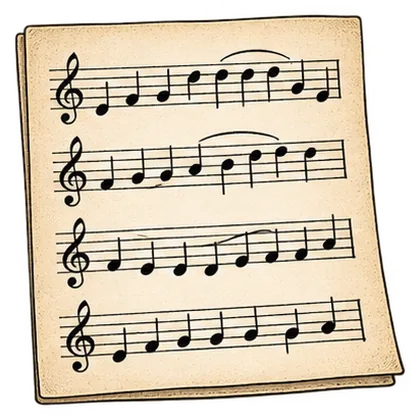
Reading musicHow to Read MusicThe staff, clefs, key and time signatures, rhythm counting and the other marks in a band part, with one short line read and counted note by note.Read the guide →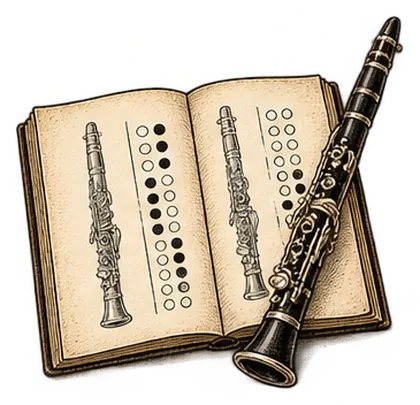 Reading chartsHow to Read a Fingering ChartWhat the circles, numbers and labels on a woodwind or brass chart mean, and how to turn a diagram into a note you can play.Read the guide →
 PracticeA Home Practice Routine That Actually WorksHow long to practice, what to do with each minute, and how to take a hard passage from slow to performance tempo in a week.Read the guide →
Helpful for practice
- Music note flash cards
- Beginning band method book
- Music theory workbook for beginners
- Staff paper notebook
As an Amazon Associate we earn from qualifying purchases. These are paid links that search Amazon; prices are the same for you. Disclosure.