
Irish music
Irish Songs for Band Instruments
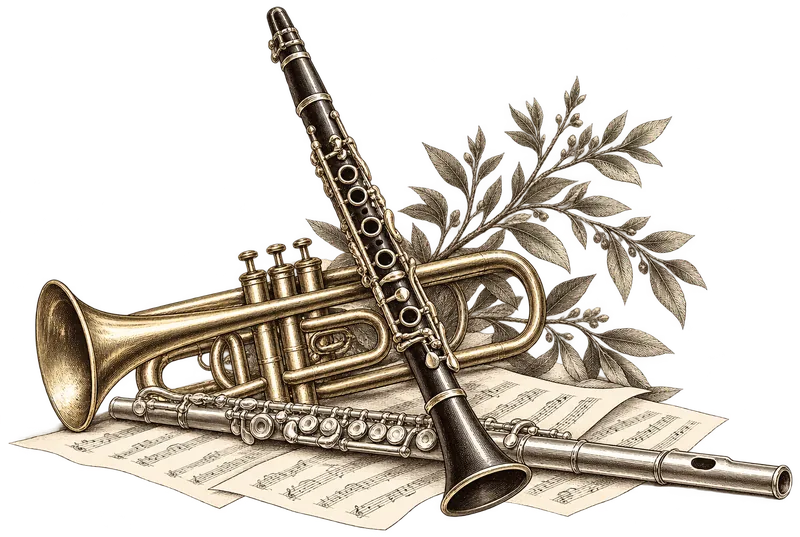
Ten public-domain Irish tunes, from The Rakes of Mallow and Danny Boy to The Irish Washerwoman, arranged for 17 band instruments with the letter names, the fingering for every note and a play-along melody. The band versions sound in the same concert key, so a mixed group can each read their own page and play together on St. Patrick’s Day.
Woodwinds
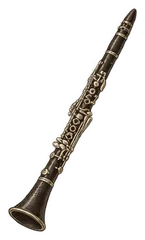
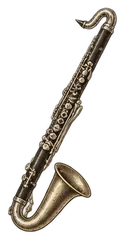
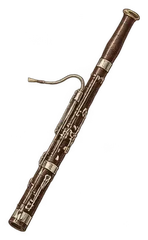
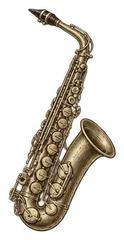
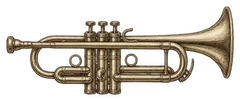
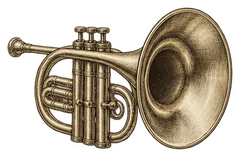
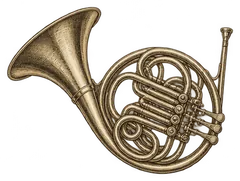
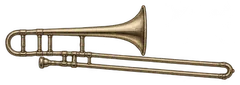
The tunes are listed from easiest to hardest, based on how many different notes each one needs, its range and its fastest rhythm.
| # | Tune | Type | Level | Band key | Notes (flute) |
|---|---|---|---|---|---|
| 1 | The Rakes of Mallow | Polka | Easy | Concert B♭ major | 9 |
| 2 | The Wearing of the Green | Song | Easy | Concert B♭ major | 8 |
| 3 | The Last Rose of Summer | Song (air) | Easy | Concert B♭ major | 8 |
| 4 | Star of the County Down | Song | Medium | Concert G minor | 8 |
| 5 | Brian Boru's March | March | Medium | Concert C Dorian | 6 |
| 6 | Danny Boy (Londonderry Air) | Song (air) | Medium | Concert A♭ major | 13 |
| 7 | Sí Bheag, Sí Mhór | Harp tune | Medium | Concert F major | 12 |
| 8 | The Irish Washerwoman | Jig | Harder | Concert B♭ major | 12 |
| 9 | The Kesh | Jig | Harder | Concert F major | 11 |
| 10 | St. Patrick's Day | Set dance (jig) | Harder | Concert B♭ major | 11 |
Every instrument, one concert key
Each instrument page is already transposed, so a director only needs to hand each player the page for their instrument. This table shows the key signature each band instrument reads; a tune in a minor or Dorian key uses the same signature with a different home note. Two tunes have too wide a range for a few instruments in the band key, so those pages use another key: Sí Bheag, Sí Mhór on oboe, mellophone and horn; The Irish Washerwoman on oboe, mellophone and horn. The recorder page uses keys that suit a soprano recorder instead, and there is a version for alto recorder too.
| Instrument | Most tunes (concert B♭ signature) | Sí Bheag, Sí Mhór and The Kesh (concert F signature) | Danny Boy (Londonderry Air) (concert A♭ signature) |
|---|---|---|---|
| Flute | B♭ major | F major | A♭ major |
| Piccolo | B♭ major | F major | A♭ major |
| Oboe | B♭ major | F major | A♭ major |
| Clarinet | C major | G major | B♭ major |
| Bass Clarinet | C major | G major | B♭ major |
| Bassoon | B♭ major | F major | A♭ major |
| Alto Sax | G major | D major | F major |
| Tenor Sax | C major | G major | B♭ major |
| Bari Sax | G major | D major | F major |
| Soprano Sax | C major | G major | B♭ major |
| Trumpet | C major | G major | B♭ major |
| Mellophone | F major | C major | E♭ major |
| French Horn | F major | C major | E♭ major |
| Trombone | B♭ major | F major | A♭ major |
| Euphonium | B♭ major | F major | A♭ major |
| Tuba | B♭ major | F major | A♭ major |
Each instrument has a free printable version: all ten tunes with the letter notes on US Letter pages, and a last page with the fingering for every note the tunes use. Teachers are welcome to copy them for students.
The Rakes of Mallow
The Rakes of Mallow is a polka about the young men about town (the rakes) of Mallow, in County Cork. It was printed in London as early as 1742 and later in Scotland. Leroy Anderson arranged it, it plays during the fight scenes in the film The Quiet Man, and Notre Dame fans use it as a fight song. Background: Rakes of Mallow, Wikipedia.
Music: traditional, printed in London as early as 1742. Melody: The Session, setting 12593 (ceolachan), checked against setting 12592 (swisspiper); note values halved.
The Wearing of the Green
The Wearing of the Green is a street ballad about the Irish Rebellion of 1798, sung to an old Irish air. The United Irishmen took green as their color, and the song laments that people were being hanged for wearing it. Many versions of the words exist; the best known is Dion Boucicault’s, written for his 1864 play Arrah-na-Pogue. Background: The Wearing of the Green, Wikipedia.
Music: traditional Irish air. The best-known words are by Dion Boucicault (1864). Melody: The Session, setting 4977 (Ptarmigan), checked against setting 54226 (JACKB).
The Last Rose of Summer
Thomas Moore wrote the poem in 1805 while staying at Jenkinstown Castle in County Kilkenny. He set it to an old air that Edward Bunting had written down from a harper in 1792, and the song was published in 1813 in Moore’s Irish Melodies. It was hugely popular through the 1800s, and Mendelssohn wrote a fantasia on it. Background: The Last Rose of Summer, Wikipedia.
Music: traditional Irish air. Words: Thomas Moore (1805), published together in 1813. Melody: The Session, setting 6049 (MBAC), checked against settings 33513 (NfldWhistler) and 43610 (Borderer); chords reduced to the top note.
Star of the County Down
Star of the County Down is set near Banbridge in County Down. A young man meets a girl named Rose McCann, and by the end of the song he imagines marrying her. The words are by Cathal MacGarvey from Ramelton, County Donegal; the tune is much older and is also sung as the hymn tune Kingsfold. Background: Star of the County Down, Wikipedia.
Music: traditional (the tune also known as Dives and Lazarus). Words: Cathal MacGarvey (1866–1927). Melody: The Session, setting 4320 (Nutty Nessie), checked against setting 38470 (JACKB) and the opening in the Wikipedia article.
Brian Boru's March
The march is named after Brian Boru, the High King of Ireland who founded the O’Brien dynasty and died in 1014. The tune itself is much later: a version was published in Dublin in 1842. The Chieftains recorded it in 1969, and the rock band Horslips built a song on it in 1976. Background: Brian Boru’s March, Wikipedia.
Music: traditional. A version was published in the Dublin Monthly Magazine in 1842. Melody: The Session, setting 13010 (ethical blend), checked against setting 57662 (A.W.B.).
Danny Boy (Londonderry Air)
The Londonderry Air was collected by Jane Ross of Limavady in County Londonderry, who sent it to the collector George Petrie. It was first printed in 1855 in his book The Ancient Music of Ireland. The English lawyer and songwriter Frederic Weatherly wrote the words of Danny Boy in 1910 and set them to this tune in 1913. It is also the victory anthem of Northern Ireland at the Commonwealth Games. Background: Londonderry Air, Wikipedia.
Music: the Londonderry Air, first published in 1855. Words to Danny Boy: Frederic Weatherly (1910), set to this tune in 1913. Melody: LilyPond score in the Wikipedia article Londonderry Air, checked against O'Neill's Music of Ireland (1903), no. 316.
Sí Bheag, Sí Mhór
Sí Bheag, Sí Mhór (“little fairy hill, big fairy hill”) is usually credited to the blind harper Turlough O’Carolan as the first tune he wrote. Sí Beag and Sí Mór are two small hills close together in south County Leitrim, said to be ancient burial sites. Today it is often played in waltz time, on the harp and at sessions. Background: Sí Bheag, Sí Mhór, Wikipedia.
Music: usually credited to Turlough O’Carolan (1670–1738), as his first composition. Melody: The Session, setting 449 (dirk), checked against setting 49385 (SamiC).
The Irish Washerwoman
The Irish Washerwoman is probably the best-known jig in the world. It has been played across Britain, Ireland and North America for more than two centuries; the earliest printing found so far is in Robert Petrie’s collection of 1790, and some scholars think it grew out of the older English tune Dargason. Its second half matches The Star at Liwis, printed around 1730. Background: The Irish Washerwoman, Wikipedia.
Music: traditional jig, in print by 1790. Melody: The Session, setting 41748 (leprecawn), checked against setting 47039 (Benjamin Glauser).
The Kesh
The Kesh (also called The Kesh Jig) is a traditional jig and a favorite at Irish sessions. The first part sits low and steady, and the second part climbs high and bounces between the notes of the chord. Background: The Kesh on The Session.
Music: traditional jig. Melody: The Session, setting 55 (Jeremy), checked against setting 54834 (Donald B).
St. Patrick's Day
St. Patrick’s Day is an old Irish tune played as a march and as a set dance, a solo step dance with its own fixed steps. Like many set dances, its second part is longer than its first (14 bars instead of 8), which is why it looks lopsided on the page. With a name like that, it is a natural choice for March 17. Background: Saint Patrick’s Day on The Session.
Music: traditional set dance and march. Melody: The Session, setting 13216 (ceolachan), checked against setting 56896 (IrishKevin).
Common questions
Which Irish tune is easiest for a beginner?
The Rakes of Mallow uses only a handful of notes and repeats them a lot. The Wearing of the Green and The Last Rose of Summer are slow and move mostly by step, so they are good next tunes.
Will a flute, a clarinet and a trumpet sound right together?
Yes, if each player reads the page for their own instrument. Each band version is arranged to sound in the same concert key; the written keys differ because clarinet, saxophone, trumpet and horn are transposing instruments. A few tunes have too wide a range for one or two instruments in that key; the playing-together section lists them.
Where are the words?
Danny Boy and The Last Rose of Summer have their first verse under the notes on every instrument page: Frederic Weatherly’s words (1913) and Thomas Moore’s (1813). Star of the County Down and The Wearing of the Green are songs too, but they are given as melodies only; the background notes say who wrote their words.
Is there a version for alto recorder?
Yes. The Irish songs for alto recorder page has all 10 tunes in keys that suit the alto, with alto fingerings and a printable PDF. The recorder tile above is for soprano recorder.
What should a school band play for St. Patrick’s Day?
For a mixed beginning group, The Rakes of Mallow and The Wearing of the Green are short and cheerful, and Danny Boy makes a slow, expressive middle number. More advanced players can add The Irish Washerwoman or St. Patrick’s Day.
Irish music for band
As an Amazon Associate we earn from qualifying purchases. These are paid links that search Amazon; prices are the same for you. Disclosure.
More for every instrument: the Christmas songs and the patriotic songs pages use the same format.