
Patriotic music
Patriotic Songs for Band Instruments
Seven public-domain patriotic songs, from Taps to The Star-Spangled Banner, arranged for 17 band instruments with the letter names, the words, the fingering for every note and a play-along melody. Every band instrument plays them in the same concert key, so a mixed group can read their own pages and play together on Veterans Day, Memorial Day or the Fourth of July.
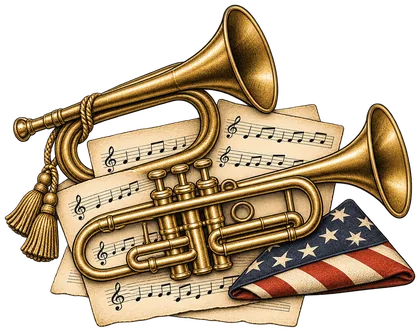
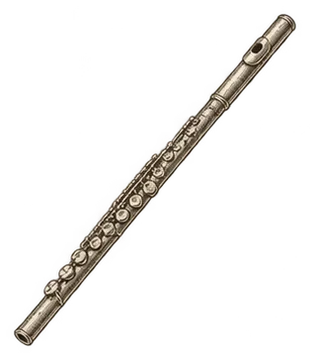
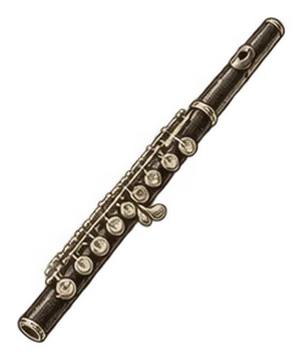
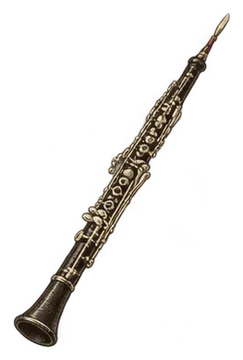
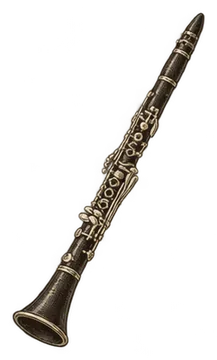
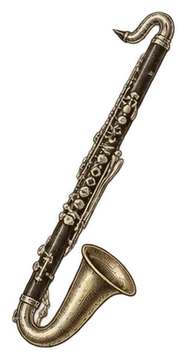
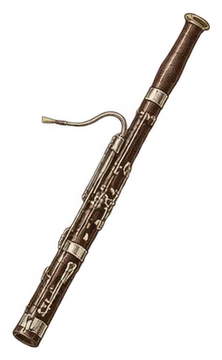
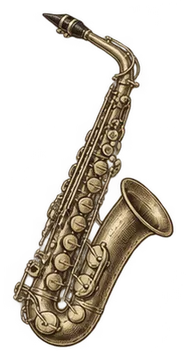
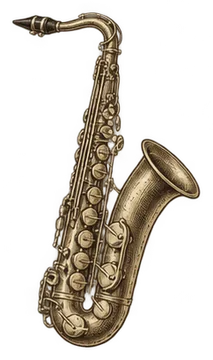
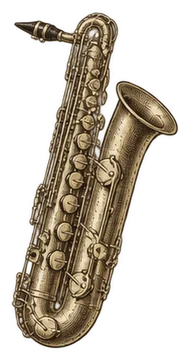
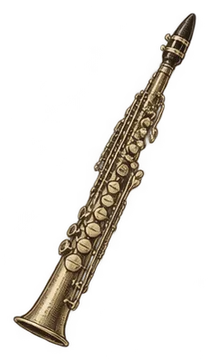
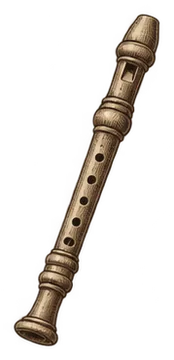
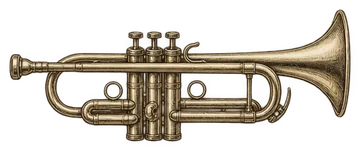
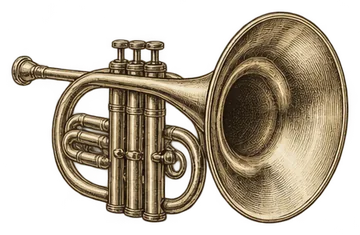
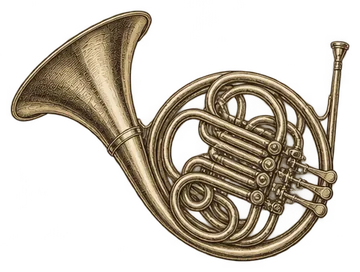
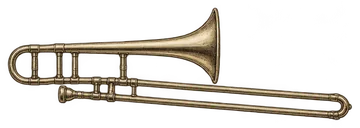
The songs are listed from easiest to hardest. Level is based on how many different notes each one needs, its range, and its fastest rhythm. Range is the distance from the lowest to the highest note.
| # | Song | Level | Band key | Notes | Range |
|---|---|---|---|---|---|
| 1 | Taps | Easy | Concert B♭ | 4 | octave |
| 2 | Yankee Doodle | Easy | Concert B♭ | 9 | minor ninth |
| 3 | My Country, 'Tis of Thee | Easy | Concert B♭ | 7 | minor seventh |
| 4 | America the Beautiful | Medium | Concert B♭ | 10 | ninth |
| 5 | Battle Hymn of the Republic | Medium | Concert B♭ | 8 | octave |
| 6 | Anchors Aweigh | Harder | Concert F | 11 | tenth |
| 7 | The Star-Spangled Banner | Harder | Concert F | 11 | twelfth |
Taps at a ceremony
Taps is 24 notes long and uses only four pitches, because it was written for a bugle. On trumpet those are G4, C5, E5, G5, all open. At a funeral, a Veterans Day service or a Memorial Day ceremony it is played once, slowly, usually by a single trumpet or bugle standing a little apart from the group. Nobody sings along. The words on these pages (“Day is done, gone the sun”) are traditional and unofficial, and are there to help you feel the rhythm.
The long notes are the hard part. Practice them as long tones: hold each one for a slow count of four at an even volume, without letting the pitch sag at the end. If you are asked to play it for a ceremony, rehearse it outdoors at least once, since cold air lowers the pitch and wind makes long notes harder to hold.
Every instrument, one concert key
A B♭ clarinet, an E♭ alto saxophone and an F horn each read a different written key to sound the same pitch. Each instrument page here is already transposed, so the director only needs to hand each player the page for their instrument. Most of the songs sound in concert B♭, the key most first-year band books start in; the ones with a wider range sound in another key so that every instrument stays within its easy notes. The transposition chart explains the relationship for any key.
| Instrument | Most songs (concert B♭) written in | Anchors Aweigh and The Star-Spangled Banner (concert F) written in |
|---|---|---|
| Flute | B♭ major | F major |
| Piccolo | B♭ major | F major |
| Oboe | B♭ major | F major |
| Clarinet | C major | G major |
| Bass Clarinet | C major | G major |
| Bassoon | B♭ major | F major |
| Alto Sax | G major | D major |
| Tenor Sax | C major | G major |
| Bari Sax | G major | D major |
| Soprano Sax | C major | G major |
| Recorder | G major | C major |
| Trumpet | C major | G major |
| Mellophone | F major | C major |
| French Horn | F major | C major |
| Trombone | B♭ major | F major |
| Euphonium | B♭ major | F major |
| Tuba | B♭ major | F major |
Ideas for a Veterans Day or Memorial Day program
For a first-year group, My Country, ’Tis of Thee and America the Beautiful are slow enough that everyone can play the melody together. Yankee Doodle makes a cheerful opener, and the Battle Hymn of the Republic, with its Glory, glory, hallelujah chorus, makes a strong closer. Anchors Aweigh fits a program that honors each branch of the service. The Star-Spangled Banner opens most ceremonies, and its range makes it a good goal for second-year players. Each instrument page has a play-along melody at full and slow speed for home practice.
Each instrument has a free printable version: all seven songs with the letter notes and words on US Letter pages, and a last page with the fingering for every note the songs use. Teachers are welcome to copy them for students.
Taps
Union general Daniel Butterfield reworked an older bugle call into Taps in July 1862, at Harrison’s Landing, Virginia, and his brigade bugler Oliver Willcox Norton was the first to play it. It began as the signal for lights out and soon replaced the firing of three volleys at funerals held close to the enemy. It is now played at military funerals, on Memorial Day and on Veterans Day. The call has 24 notes and only four different pitches, because it was written for a bugle, which has no valves. Source: Taps (bugle call), Wikipedia.
Music: arranged by Daniel Butterfield (1862). Words: traditional, not official.
Yankee Doodle
The tune was sung by British soldiers before the American Revolution to mock the colonial troops. Americans took it over during the war and made it their own. One early version of the words is credited to Richard Shuckburgh, a British Army surgeon, around 1755. The “went to town, a-riding on a pony” verse is the one most children learn, and Yankee Doodle is the state song of Connecticut. Source: Yankee Doodle, Wikipedia.
Music: traditional (known by the 1750s). Words: traditional verse; chorus as printed in The Everyday Song Book (1927).
My Country, 'Tis of Thee
Samuel Francis Smith wrote the words in 1831 while he was a student at Andover Theological Seminary. The song was first sung in public on July 4, 1831, at a children’s Independence Day celebration at Park Street Church in Boston. It uses the same melody as Britain’s national anthem, and it was one of the main patriotic songs in the United States before The Star-Spangled Banner became the national anthem in 1931. Source: My Country, 'Tis of Thee, Wikipedia.
Words: Samuel Francis Smith (1831). Music: the tune of “God Save the King” (anonymous, 1740s).
America the Beautiful
Katharine Lee Bates wrote the poem after a trip to the top of Pikes Peak in Colorado, and it was first printed on July 4, 1895, in the church paper The Congregationalist. Samuel A. Ward had written the tune “Materna” in 1882 for a different hymn. The words and the tune were first published together in 1910. Source: America the Beautiful, Wikipedia.
Words: Katharine Lee Bates (1895, revised 1911). Music: “Materna” by Samuel A. Ward (1882).
Battle Hymn of the Republic
Julia Ward Howe wrote the words in November 1861 after visiting a Union Army camp near Washington. She set them to the marching song “John Brown’s Body”, and The Atlantic Monthly printed them in February 1862. The tune itself came from an earlier camp-meeting hymn, “Say, Brothers, Will You Meet Us?”. Source: Battle Hymn of the Republic, Wikipedia.
Words: Julia Ward Howe (1861). Music: “John Brown’s Body”, from a camp-meeting tune credited to William Steffe (1856).
Anchors Aweigh
Charles A. Zimmermann, bandmaster at the U.S. Naval Academy, wrote the march in 1906, with words by midshipman Alfred Hart Miles, for that year’s Army–Navy football game. The “Anchors aweigh, my boys” verse shown here comes from a 1926 revision by later midshipmen, which is why it says farewell to college joys. It is the song of the U.S. Navy. Source: Anchors Aweigh, Wikipedia.
Music: Charles A. Zimmermann (1906). Words of this verse: 1926 revision of Alfred Hart Miles’s 1906 lyrics.
The Star-Spangled Banner
Francis Scott Key wrote the poem in September 1814 after watching the British bombard Fort McHenry in Baltimore, and seeing the American flag still flying the next morning. It was sung to a popular English tune by John Stafford Smith. Congress made it the national anthem in 1931. This is the service version prepared for Army and Navy bands in 1918. Source: The Star-Spangled Banner, Wikipedia.
Words: Francis Scott Key (1814). Music: “To Anacreon in Heaven” by John Stafford Smith (c. 1773). Service version of 1918.
Common questions
Which patriotic song is easiest for a beginner?
Taps uses only four different notes on every instrument, so the notes are easy; the challenge is holding the long notes steadily. Yankee Doodle and My Country, ’Tis of Thee are the easiest tunes that move.
Will a flute, a clarinet and a trumpet sound right together?
Yes, if each player reads the page for their own instrument. All the band versions are arranged to sound in the same concert key: concert B♭ (concert F for Anchors Aweigh and The Star-Spangled Banner). The written keys differ because clarinet, saxophone, trumpet and horn are transposing instruments.
What notes are in Taps on trumpet?
On trumpet, Taps is written in C and uses G4, C5, E5, G5, all played open with no valves down. It was written for the bugle, which can only play the natural notes of its tubing, so every note of the call is one of those natural notes.
Why aren't God Bless America and the Air Force song included?
They are still under copyright: God Bless America was published in 1938 and the U.S. Air Force song in 1939. Every song here had its music and words published before 1931, so they are in the public domain in the United States.
Why does the recorder page use different keys?
Soprano recorder is easiest in G and C major, so its versions use those keys. A recorder playing these will not match the band versions; to play together with a band instrument, use the flute or oboe page, which is at concert pitch, and agree on a key.
Patriotic music for band
As an Amazon Associate we earn from qualifying purchases. These are paid links that search Amazon; prices are the same for you. Disclosure.
Looking for holiday music? The Christmas songs page has fourteen carols for every instrument in the same format.