
Soprano Sax · treble clef
How to Play D (D5) on Soprano Sax
D on the soprano sax is the D written on the fourth line (D5 in octave numbers). Here is the fingering, shown as a diagram and in words.
Sounds as concert C
D
Press: octave key (left thumb), left first finger, left second finger, left third finger, right first finger, right second finger and right third finger.
Same fingering as low D, plus the octave key.
Nearby notes
Side C is easier when moving between B and C.
No keys pressed; this open note can sound thin, so keep steady air.
See every note on one page in the soprano sax fingering chart.
Getting there from the notes next to it
In music, this note is usually approached from a neighbor a half step away. Here is what changes on soprano sax:
- Half step below: C♯5. 7 keys change from this note. Nothing pressed: every key stays open.
- Half step above: D♯5. 1 key change from this note. Press: octave key (left thumb), left first finger, left second finger, left third finger, right first finger, right second finger, right third finger and low E♭ key.
Practice the move slowly between the two notes, back and forth, until both sound clean at the same volume.
Where you will play D5
Easy songs: Hot Cross Buns, Happy Birthday.
Christmas carols: Jolly Old Saint Nicholas, Good King Wenceslas, Away in a Manger, Auld Lang Syne, O Come, All Ye Faithful, O Christmas Tree, We Wish You a Merry Christmas, Hark! The Herald Angels Sing, Angels We Have Heard on High, Silent Night.
Patriotic songs: Yankee Doodle, America the Beautiful, Battle Hymn of the Republic, Anchors Aweigh, The Star-Spangled Banner.
Major scales: concert B♭, concert E♭, concert F, concert A♭, concert C, concert D♭, concert G. It is also in the chromatic scale.
Common questions
What does this note sound like on soprano sax?
It sounds as concert C, which is the note a piano or tuner shows. The play button above plays that pitch.
Is there more than one way to finger it?
This chart lists one standard fingering for it on soprano sax. Advanced players sometimes use special fingerings for tuning; your teacher can show you any that suit your instrument.
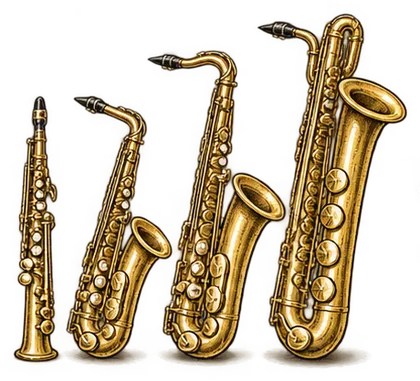 SaxophoneSoprano, Alto, Tenor and Baritone Saxophones ComparedThe four saxophones in a school band share one set of fingerings, so what changes from one to the next is the size of the horn and what it asks of your embouchure and air.Read the guide →
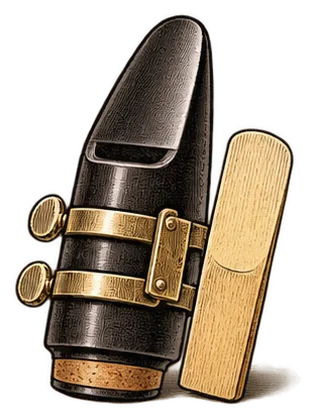 Clarinet and saxWhy Your Clarinet or Saxophone SqueaksHow to tell a reed, embouchure or finger problem from a leak or a bent key, with two real squeaks traced step by step.Read the guide →